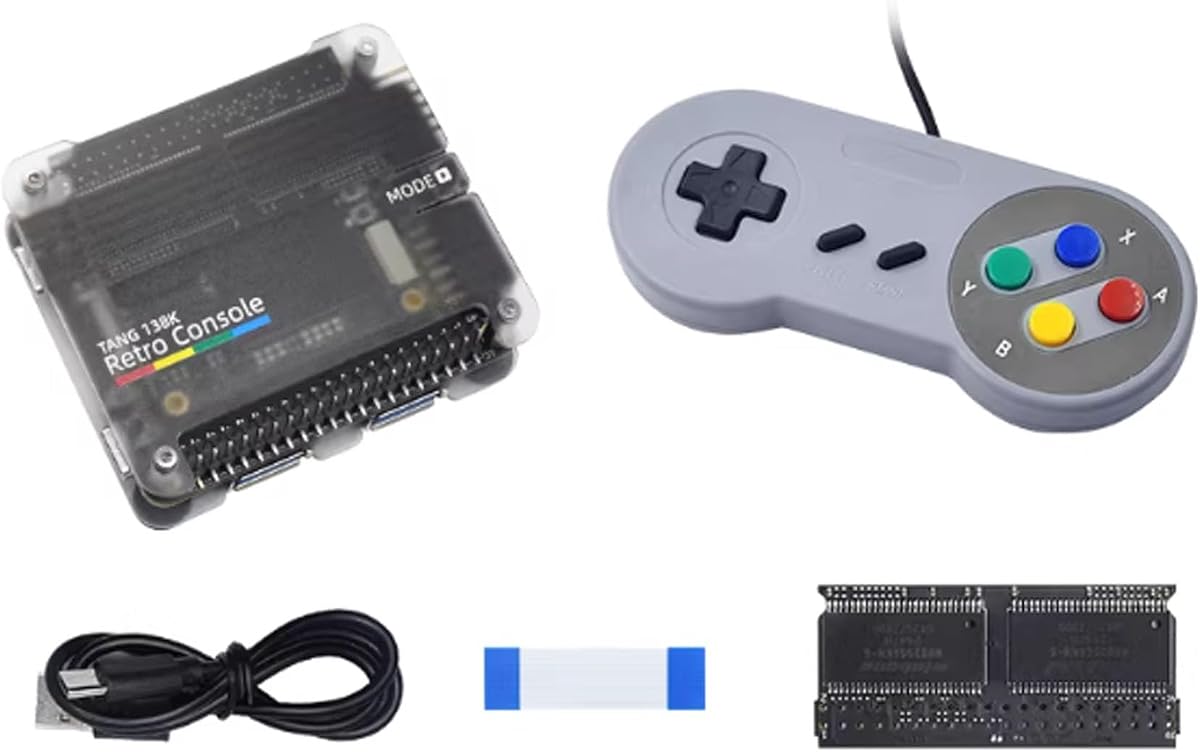
Sipeed Tang Console 138K
4.9Editor score
138K LUT4 FPGA capacity
RISC-V AE350 hardcore core
HDMI output up to 1080P
This guide compares ten top Fpga Retro Consoles for accuracy, expandability, and performance to help enthusiasts choose the perfect FPGA hardware platform.
Fpga Retro Consoles offer enthusiasts the best way to experience classic games with modern accuracy. These devices use field programmable gate arrays to replicate original hardware logic faithfully. They provide low latency, high compatibility, and endless expandability for retro gaming fans.
We compared ten leading models based on FPGA capacity, output options, and developer support. Our analysis covers everything from entry level boards to complete handheld units. We evaluated community resources, core availability, and hardware flexibility for each option.
Each pick shows what makes that device stand out in the current market. Prices and availability change frequently so check current listings before buying. Use this guide to find the perfect FPGA platform for your specific gaming needs and budget constraints.
4.9Editor score

4.5Editor score

4.5Editor score
The following table compares all ten selected FPGA retro consoles side by side. It highlights key specifications like FPGA capacity, connectivity options, and form factor to help you make an informed decision quickly.




The Sipeed Tang Console 138K stands out as the premium choice for serious FPGA enthusiasts. It offers massive capacity for running complex emulation cores with near perfect accuracy. This device is built for those who demand the highest fidelity from their retro gaming experience.
We may earn a commission when you buy through this link, at no additional cost to you.
With 138K LUTs this board handles demanding cores like PlayStation 1 emulation smoothly. The HDMI output ensures crisp visuals on modern displays without lag. Dual PMOD ports give you incredible flexibility for adding custom input or audio interfaces.
It requires more technical knowledge than plug and play handhelds. You need to flash firmware and manage cores yourself. However for developers and hackers this is a feature not a flaw. The open nature invites customization and learning.
Buy this if you want the absolute best performance and expandability. It is ideal for home setups where you connect to a TV. If you prefer portable handhelds look at other options in this list instead.
The 138K LUT4 count allows running multiple complex cores simultaneously without performance degradation.
Dual PMOD and Raspberry Pi HAT compatibility let you add custom hardware features easily.
We may earn a commission when you buy through this link, at no additional cost to you.
This Tang Console model bridges the gap between development and gaming. It runs powerful cores on a compact board that fits in your hand. You can switch between 60K and 138K modules to match your needs exactly.
We may earn a commission when you buy through this link, at no additional cost to you.
The USB3.0 and HDMI outputs provide high speed data transfer and sharp visuals. Tang Core firmware makes managing different retro systems easier than traditional setups. It is perfect for hobbyists who want to experiment with new cores.
It lacks the buttons and screen of a full handheld. You must connect external controllers and a display to play. This makes it less portable than integrated devices but more flexible for home use.
Choose this if you enjoy tinkering and want multiple FPGA options in one box. It is great for developers building their own cores too. If you want plug and play gaming consider a full handheld instead.
Supports NESTang SNESTang GBATang and other cores with fast switching capabilities.
USB3.0 ensures low latency for controllers and high speed for data transfer.
We may earn a commission when you buy through this link, at no additional cost to you.
This version integrates a powerful RISC-V AE350 core directly on board. That means you can run Linux alongside your FPGA cores effortlessly. It is a true single board computer disguised as a retro console.
We may earn a commission when you buy through this link, at no additional cost to you.
The 1GB DDR3 RAM lets you load multiple cores and assets quickly. Fanless operation ensures silent gaming sessions without any distracting noise. HDMI and USB 3.0 offer robust connectivity for modern setups.
It is tiny so managing cables and placement can be tricky. You need to source your own case and power supply for best results. These are minor issues given the performance you get for the price.
Get this if you want a Linux capable FPGA console that does everything. It is perfect for tech savvy users who want one device to rule them all. Beginners might find the setup overwhelming compared to handhelds.
The AE350 hardcore runs applications and OS alongside FPGA logic seamlessly.
5W power consumption and fanless design make it ideal for living rooms.
We may earn a commission when you buy through this link, at no additional cost to you.
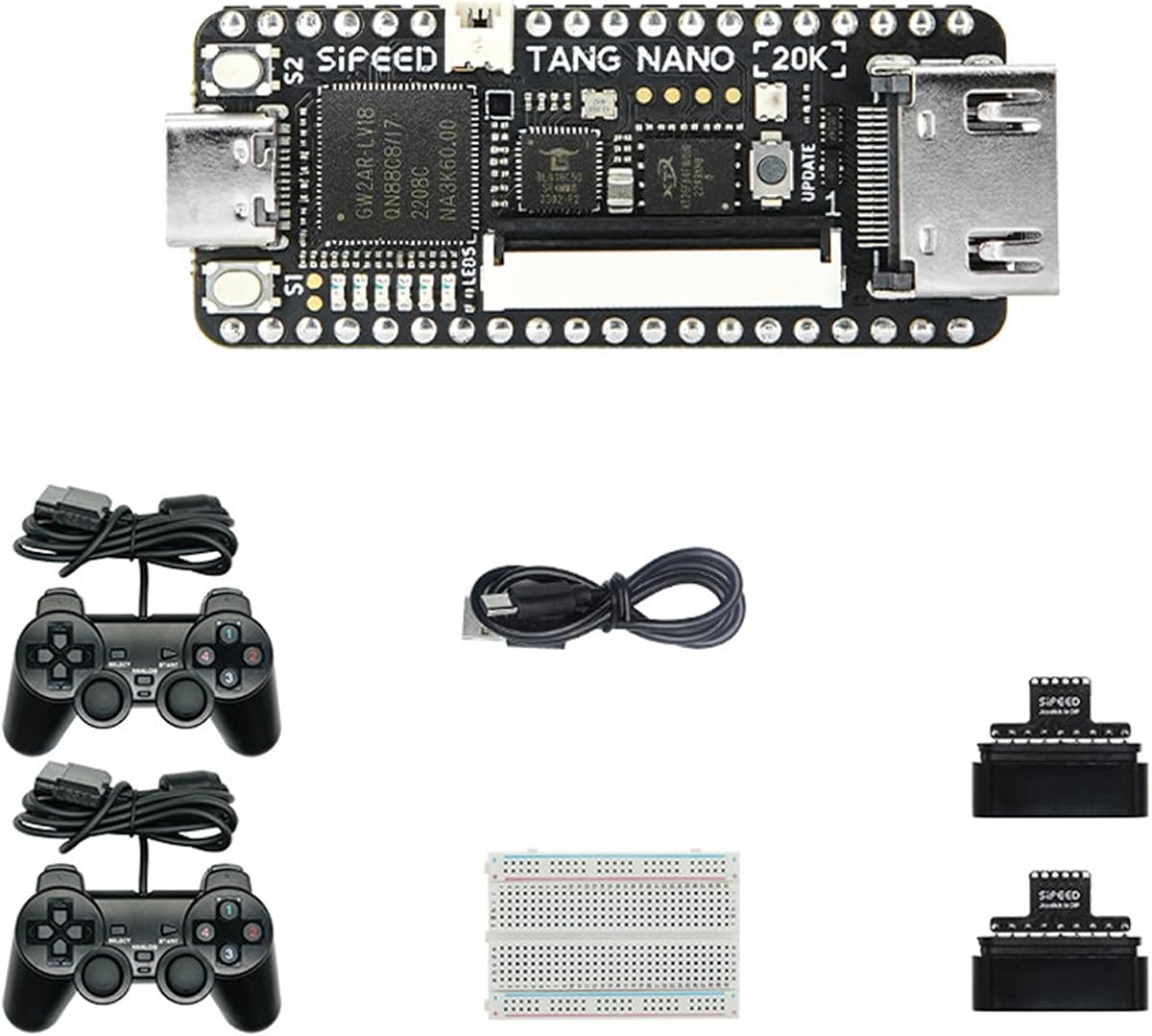
The Tang Nano 20K is the perfect entry point for FPGA gaming. It costs very little but still handles 8-bit and 16-bit emulation well. It is a great way to learn FPGA development without spending hundreds.
We may earn a commission when you buy through this link, at no additional cost to you.
It includes all the hardware you need for video output and basic input. The onboard debugger makes flashing new cores straightforward for beginners. You can run NES SNES and GBA cores reliably.
It cannot handle demanding 32-bit consoles due to limited LUTs. You will need external buttons for control since it has none built in. For learning and classic gaming this is not a major issue.
Choose this if you want to dip your toes into FPGA retro gaming cheaply. It is also great for students or makers on a tight budget. Once you outgrow it you can upgrade to the 60K or 138K versions.
This board offers the lowest barrier to entry for FPGA development and gaming.
Fully compatible with open source cores and developer toolchains.
We may earn a commission when you buy through this link, at no additional cost to you.
This kit version comes with more accessories than the board only option. It simplifies the start for you by including necessary connectors and a case. The Linux support adds extra utility beyond just retro games.
We may earn a commission when you buy through this link, at no additional cost to you.
The BL616 chip makes programming easier than older development boards. You get HDMI video out right away without soldering anything. It is a solid choice for those new to single board computers.
You still need to manage your own controller setup via USB or GPIO. This adds a step for casual gamers who want to play immediately. But for developers it provides exactly what you need.
Get this kit if you want convenience without paying premium prices. It is perfect for education or prototyping custom interfaces. If you want a console that plays games out of the box look elsewhere.
Includes everything needed to start programming and playing immediately.
Onboard chip simplifies debugging and firmware flashing for users.
We may earn a commission when you buy through this link, at no additional cost to you.
This device emphasizes its role as a Linux capable board computer. It runs open source systems well while handling retro emulation. The dual display support is useful for creative setups.
We may earn a commission when you buy through this link, at no additional cost to you.
NES and SNES cores work very well on this hardware. It has enough speed for smooth gameplay without dropping frames. The BL616 debugger helps maintain software stability over time.
It is not a self contained handheld unit. You must attach cables and external controllers to make it usable. This makes it better for a permanent setup than travel.
Choose this if you want a Linux computer that does retro gaming too. It is great for makers building custom kiosks or arcade cabinets. Casual players may prefer integrated handhelds that need no setup.
Supports driving multiple screens for unique project configurations.
Runs open source Linux for broader application use beyond games.
We may earn a commission when you buy through this link, at no additional cost to you.
The Arduboy FX-C brings retro gaming into your pocket easily. It comes with over 300 classic games preloaded on board. You do not need to search for ROMs or set up emulators.
We may earn a commission when you buy through this link, at no additional cost to you.
Its tiny size means it fits in your wallet or a jacket pocket. The USB-C multiplayer link makes playing with friends simple and fun. It is also a tool for learning coding if you want.
The screen is small and limited to 8-bit visuals. If you want 32-bit or colorful graphics this will not satisfy you. It is strictly for purists who love simple monochrome games.
Buy this for travel or as a fun gift for any age. It is the most affordable way to get a ready to play console. Just ensure you are happy with the 8-bit limitation before buying.
300+ games are installed so you start playing instantly.
Free tutorials teach coding and game development basics.
We may earn a commission when you buy through this link, at no additional cost to you.
The Trimui Brick Pro offers a massive screen for handheld gaming. At nearly four inches the display is sharp and vibrant. It makes playing older systems feel modern with high resolution scaling.
We may earn a commission when you buy through this link, at no additional cost to you.
Hall Effect joysticks give you precise input without drift issues. The battery lasts for hours of continuous play sessions. You can fast charge it quickly between gaming breaks with USB-C.
The console ships without an SD card or any games. You must purchase memory and load your own ROMs manually. This adds a step but keeps the price lower than preloaded alternatives.
Choose this if screen quality is your top priority. It is fantastic for home use on a couch. If you want games out of the box consider an alternative with preloaded content.
IPS Full Viewing Angle screen delivers excellent colors and sharpness.
Magnetic sensors ensure accurate control with no physical wear.
We may earn a commission when you buy through this link, at no additional cost to you.
The RG40XXV combines Linux flexibility with a user friendly interface. It comes with games so you do not have to build a library from scratch. The Linux system allows for deep customization if you want.
We may earn a commission when you buy through this link, at no additional cost to you.
Hardware performance supports a wide range of retro systems smoothly. It handles up to PS1 era titles without major issues. The build quality feels solid enough for daily use.
Depending on the batch settings might need minor adjustments to work best. Software updates depend on community support rather than official channels. This can be frustrating for those who want perfect stability.
Get this if you want a powerful handheld with some games ready. It is great for tinkerers who like open systems. Users who want fixed systems should look at closed ecosystem consoles.
Includes a range of retro games right out of the box.
Linux OS allows you to tweak settings and install software.
We may earn a commission when you buy through this link, at no additional cost to you.
This version of the Brick PRO is the premium handheld experience. It features a fully laminated screen that looks amazing in all lighting. The Linux OS gives you full control over your ROM library.
We may earn a commission when you buy through this link, at no additional cost to you.
Hall Effect joysticks provide smooth precise analog input. The battery lasts long enough for trips or long sessions. You can add external controllers for multiplayer on the go.
You have to add your own games and setup the system first. It lacks the convenience of preloaded devices. But for control and quality this is a worthwhile trade-off for enthusiasts.
Choose this if you value screen quality and hardware precision most. It is ideal for home or travel with proper setup. If you want zero setup pick a preloaded alternative from this list.
Fully laminated 3.95 inch screen with vibrant colors and sharpness.
Built-in vibration motor adds immersive feedback to your games.
We may earn a commission when you buy through this link, at no additional cost to you.
Choosing the right FPGA retro console requires understanding several technical and practical factors. This guide explains what to look for so you can match a device to your needs.
FPGA capacity measured in LUTs determines what cores you can run. Higher capacity like 138K allows demanding emulation. Lower capacity 20K works well for 8 and 16-bit systems.
Prioritize higher capacity if you want future proofing for 32-bit consoles.
Check HDMI USB and expansion ports to fit your setup. HDMI ensures compatibility with modern displays. USB supports for controller input and data transfer.
Look for multiple USB types to connect peripherals easily.
The device should have active community support for emulator cores. Popular systems like NES SNES GBA are usually well supported. Ensure firmware updates are available for bug fixes.
Choose brands with active forums and documentation.
Decide between handheld and desktop setups. Handhelds are portable but less flexible. Desktop boards allow better cooling and expansion options.
Pick handheld if you travel often or prefer couch gaming.
Prices vary widely from cheap boards to premium kits. Determine how much you want to spend on the device and accessories. Some boards need external monitors or cases which adds to the cost.
Set a total budget including all necessary peripherals.
Some devices require flashing firmware or managing SD cards. Others come preloaded with games. Consider your technical skills when choosing.
Select preloaded options if you want immediate play.
Look for PMOD GPIO or PCIe connectors if you plan custom projects. This is important for developers or modders. It lets you add new features or interfaces later.
Maximize expansion ports for long term value.
If buying a handheld check battery capacity and runtime. Devices with 5000mAh batteries last longer on trips. USB-C charging is convenient for modern power needs.
Ensure battery life matches your typical usage sessions.
Start by reading the manufacturer guide to set up firmware. For boards you must flash cores to the SD card via tools. Handhelds may need firmware updates over USB.
Connect controllers to USB or GPIO ports depending on the model. Ensure your display is compatible with the HDMI resolution. Adjust settings in the OS to get the best output.
Keep the device clean and avoid dust buildup in ports. Store handhelds in a protective case to prevent damage. Update software regularly to fix bugs and add cores.
An FPGA retro console uses field programmable gate arrays to replicate original hardware logic. This provides accurate low latency gameplay. It is more precise than software emulation.
Some handhelds are but most boards require setup. You need to flash cores and configure settings. Check descriptions to see if games are preloaded.
Many models support USB controllers or adapter cables. Some have GPIO for direct wiring of retro pads. Check compatibility for your specific controller type.
Yes they have HDMI outputs for modern displays. You may need settings to adjust resolution for older systems. This ensures clear visuals on big screens.
For boards you add ROMs to SD cards. Handhelds allow file transfer via USB. Some use cloud based systems for updates and downloads.
No for basic play you do not need coding. Advanced users can create custom cores with programming. Many tools simplify the process for beginners.
The hardware is legal. You must own the original games to use ROMs. Be aware of copyright laws in your region.
138K has more resources for complex cores. It supports higher fidelity emulation. 60K is sufficient for most 16-bit systems.
We highlighted the Sipeed Tang Console 138K for raw performance. The Arduboy FX-C offers the best portable option. The Trimui Brick PRO stands out for screen quality.
Focus on what matters most to you whether it is size or fidelity. Handhelds suit travel while boards suit permanent setups. Choose based on how you play most.
Always check current pricing before purchasing. Prices change often so compare listings carefully. Use this guide to find the right fit.