
Captel MDL 200
Basic corded phone design
Simple dialing interface
Affordable entry level option
This guide compares the top captioned telephones for hearing impaired users, evaluating features like amplification, captioning services, and ease of use for
Finding the right communication device is crucial for maintaining independence. Captioned telephones offer real-time text support alongside audio. These devices help individuals with hearing loss engage confidently in daily conversations without missing critical details.
We evaluated ten leading models based on amplification power, caption accuracy, and user interface design. Our analysis includes corded and cordless options with specialized features for seniors. Each product was assessed for compatibility with hearing aids and overall build quality.
Every pick highlights unique strengths such as large displays or advanced noise reduction. Please note that pricing and availability fluctuate frequently. Always check the latest product listings before making a final purchasing decision to ensure you get the best value.

4.3Editor score

4.0Editor score
The following table provides a side-by-side comparison of all ten models. It highlights key specifications like volume levels, special features, and connectivity options to help you find the perfect match for your needs.




This Hamilton model stands out with its large touchscreen displaying real-time captions. It has a strong rating and offers significant amplification for clear audio. The device turns everyday calls into confident conversations for users with hearing loss.
We may earn a commission when you buy through this link, at no additional cost to you.
Key strengths include the ability to listen and read simultaneously via captions. It supports both auto and assisted captioning modes. The phone is hearing aid compatible with customizable tones and caption sizes for comfort.
Trade-offs involve the requirement for high-speed internet and US residency for service. Some users may find the registration process for captioning services time-consuming. However the clarity provided justifies these minor setup steps.
Anyone needing visual support for calls should consider this model highly. It is ideal for seniors who miss words during conversations. We recommend it as a top choice for reliable captioned telephone service.
The large screen displays incoming speech as text instantly so you never miss a word.
Adjust caption size and tone control to match your specific hearing and vision needs perfectly.
We may earn a commission when you buy through this link, at no additional cost to you.
The Geemarc Ampli550 is designed for those needing maximum sound volume. It features a loud ringer and flashing strobe to ensure no calls are missed. This model helps hard-of-hearing individuals make calls with ease and confidence.
We may earn a commission when you buy through this link, at no additional cost to you.
Its key strength lies in the 55dB amplification and 95dB ringer output. The talking keys and Caller ID assist users with low vision. It includes emergency keys and one-touch memory dial for convenience.
The corded nature might limit mobility compared to cordless systems. The price is higher than some basic models. Yet the robust alert features make it a reliable gift for loved ones.
This phone is perfect for users who struggle to hear rings or tones. It suits seniors needing strong alerts and clear audio. We suggest it for those prioritizing loudness and visual cues.
The combination of a 95dB ringer and bright strobe light ensures you hear every incoming call.
Talking keys announce numbers and IDs aloud helping users with vision issues dial correctly.
We may earn a commission when you buy through this link, at no additional cost to you.
The Captel MDL 200 serves as a basic corded phone for the hearing impaired. While it lacks extensive data on its website it offers a straightforward communication tool. It is an entry point for those needing a simple landline device.
We may earn a commission when you buy through this link, at no additional cost to you.
Its main benefit is affordability and ease of use. The design likely focuses on essential dialing and clear audio. It fits budgets where high-end features are not required for daily use.
Users might miss advanced features like talking IDs or huge amplification. It is a standard phone rather than a specialized high-tech device. This limitation is acceptable for basic communication needs.
Buy this if you need a reliable simple phone without extra costs. It works for basic contact with family and friends. We recommend it for those seeking a no-fuss telephone solution.
This device focuses on getting the call connected without complex menus or settings to navigate.
An ideal choice for users who need a basic working phone without breaking the bank.
We may earn a commission when you buy through this link, at no additional cost to you.
The Clarity AltoPlus is certified for mild to severe hearing loss. It offers significant amplification and visual alerts for incoming calls. This model includes features like Talking Caller ID and outgoing speech amplification.
We may earn a commission when you buy through this link, at no additional cost to you.
Key strengths include the 53dB gain and 100dB ringer with a visual light. It supports neck loops and headsets for better integration with hearing aids. The ergonomic design helps users with arthritis adjust settings easily.
The unit is physically large and may require significant desk space. Setup for all features might seem complex at first. Despite this the specialized audio features are robust for severe needs.
This phone is ideal for users with moderate to severe hearing loss. It is great for those who use hearing aids and need visual cues. We recommend it for advanced hearing support needs.
Certified for severe loss with extra loud ringer and amplification to ensure you hear every call.
A bright visual indicator ensures you know when the phone rings even if you cannot hear it.
We may earn a commission when you buy through this link, at no additional cost to you.
This Serene model offers a cordless solution with talking Caller ID features. It aims to provide high definition audio for clearer conversations. The design allows for mobility around the home while keeping calls clear.
We may earn a commission when you buy through this link, at no additional cost to you.
Its main advantage is the wireless nature combined with clear audio. Users can answer calls from anywhere in the house. The talking Caller ID helps identify callers without looking at a screen.
Lack of detailed specs makes it hard to compare volume levels. Battery life for the cordless handset is a factor to consider. It may not suit those needing extreme amplification.
It is suitable for those wanting mobility with clear audio. Good for seniors who move around the house frequently. We suggest it for users prioritizing convenience and wireless use.
The cordless design lets you answer calls from any room without being tied to a desk.
High definition audio ensures voices sound natural and clear during every conversation you have.
We may earn a commission when you buy through this link, at no additional cost to you.
The VTech SN5147 combines a reliable corded base with a cordless handset. It features photo speed dial slots for easy contact access. This hybrid system is designed for seniors and hard of hearing individuals.
We may earn a commission when you buy through this link, at no additional cost to you.
Key strengths include the 90dB ringer and 50dB audio assist. The photo dial slots allow users to call loved ones with one touch. It also includes a smart call blocker to filter unwanted numbers.
Setting up both corded and cordless units can take some time. The amplification is good but may not suffice for profound loss. However the photo dial feature is excellent for memory support.
This phone is best for households needing both stability and mobility. Ideal for seniors with dementia or memory issues. We recommend it for families wanting photo contacts and call blocking.
Use photo slots to call family members instantly without remembering numbers or looking up lists.
A corded base ensures you can still make calls during power outages or battery failures.
We may earn a commission when you buy through this link, at no additional cost to you.
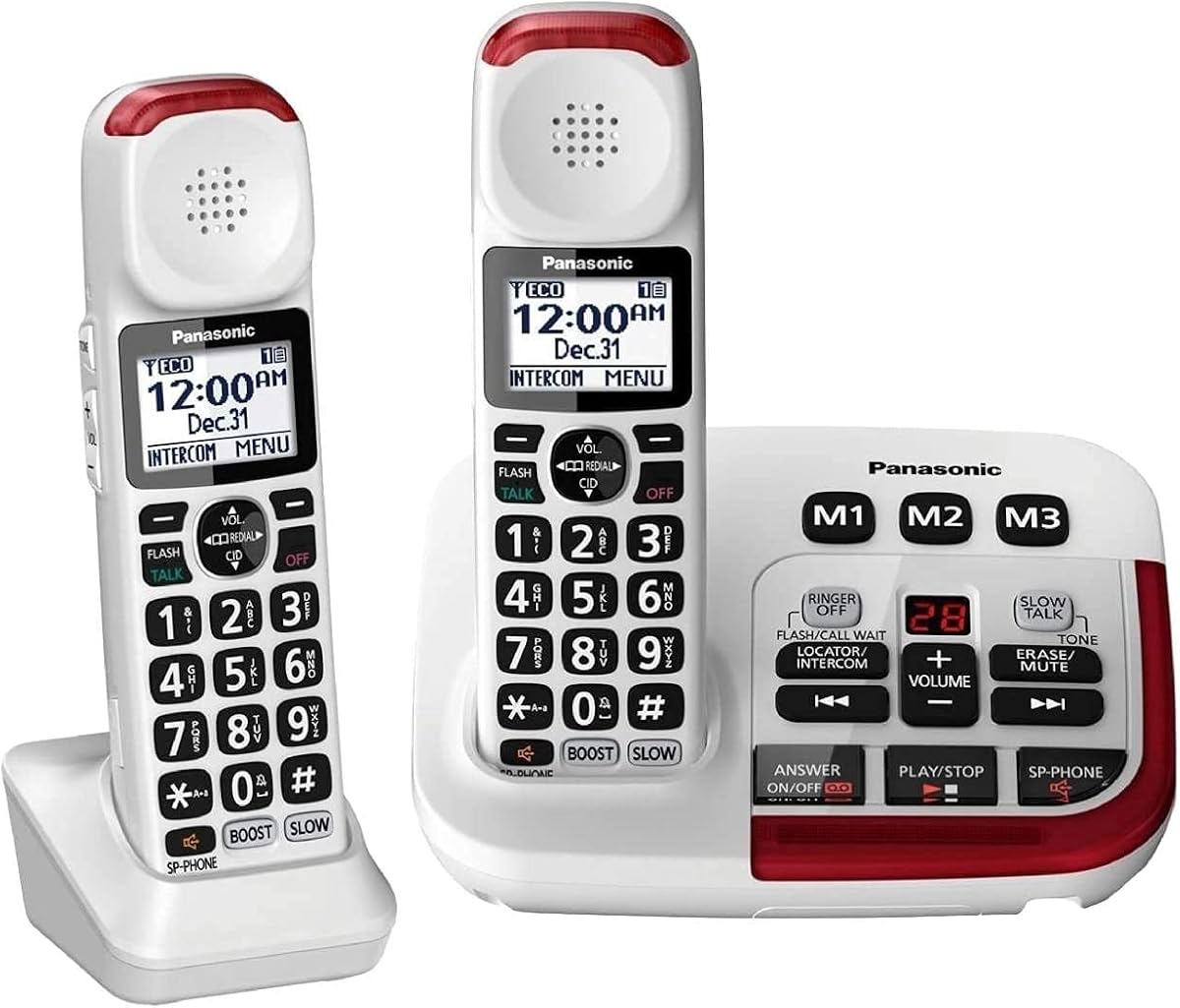
This Panasonic model includes noise reduction for clearer calls in noisy places. It offers a volume booster and slow talk feature for real time speech. The system is expandable and includes talking keypad functionality.
We may earn a commission when you buy through this link, at no additional cost to you.
Its standout feature is the noise suppression technology that filters out interference. The slow talk feature helps understand fast speech. It also supports multiple handsets for larger homes.
The system may be complex to configure with multiple handsets. Users might find the menus challenging to navigate initially. However the clarity improvements are significant for active households.
It is perfect for environments with background noise like kitchens. Great for those struggling with fast speakers. We recommend it for households needing multiple handsets and clarity.
Built-in noise reduction filters out background sounds so you focus on the caller clearly.
Slow talk helps you understand rapid speech by adjusting the speed of incoming messages.
We may earn a commission when you buy through this link, at no additional cost to you.
The SWISSVOICE model simplifies calling with photo memory buttons and large keys. It includes an answering machine and hearing aid compatibility. This design helps visually impaired users see who they are contacting easily.
We may earn a commission when you buy through this link, at no additional cost to you.
Key strengths include the large display buttons with photo labels. It comes with an extra cordless handset for flexibility. The ringer can be adjusted up to 90dB for strong alerts.
User ratings suggest some challenges with setup and reliability. The interface is simple but requires patience to configure. However the photo buttons are excellent for unsteady hands.
This phone is ideal for users needing visual cues for dialing. Perfect for elderly friends with limited vision. We suggest it for families wanting clear contact identification.
Photo buttons display pictures of contacts making it easy to identify who you are calling.
Extra large buttons reduce the risk of accidental presses and help with unsteady hands.
We may earn a commission when you buy through this link, at no additional cost to you.
This Panasonic bundle provides two handsets for expanded coverage. It features noise reduction and slow talk for clear conversation. The system can expand to six handsets for large multi story homes.
We may earn a commission when you buy through this link, at no additional cost to you.
Its primary benefit is the inclusion of multiple handsets in one package. Users get volume boost and noise reduction features standard. Visual ringers ensure everyone sees when the phone rings.
The high cost may be a barrier for smaller homes. Configuring multiple handsets requires technical effort. Yet the coverage and clarity justify the price for larger families.
It is best for large households needing multiple devices. Great for homes where calls are taken in different rooms. We recommend it for those needing extensive coverage and clarity.
With multiple handsets you can answer calls from any room without running across the house.
The system supports up to six handsets allowing you to add more as your needs change.
We may earn a commission when you buy through this link, at no additional cost to you.
This amplified phone offers a 100dB ringer and LED flash alerts. It is designed for seniors with photo speed dial buttons. The device ensures you never miss a call in low light or noise.
We may earn a commission when you buy through this link, at no additional cost to you.
Its key strength is the extremely loud ringer and visual indicator. The photo buttons help dial numbers instantly. It is hearing aid compatible for a smooth experience.
It lacks cordless flexibility which limits movement. The setup for photo memory might be tricky. However the flash alert ensures visibility for visual impaired users.
It is perfect for desks where high visibility is needed. Ideal for seniors needing strong visual and audio alerts. We suggest it for users prioritizing loudness and flashes.
The LED flashes brightly to signal incoming calls so you never miss a ring at all.
A 100dB ringer is loud enough to be heard even in noisy environments like a busy kitchen.
We may earn a commission when you buy through this link, at no additional cost to you.
Selecting the right device requires understanding your specific hearing loss level and lifestyle needs. We break down the most important factors to consider before you buy.
Amplification refers to the volume boost the phone provides. Look for devices offering at least 40dB to 50dB gain for moderate hearing loss. If you need more sound check for models offering up to 100dB ringer volume.
Higher amplification ensures you hear the voice clearly without straining.
Captioned telephones provide text on a screen while you talk. Ensure the service is compatible with your internet connection. Some require a specific provider or registration to function correctly.
Check if the phone supports free nationwide captioning or if a subscription is needed.
Visual alerts like strobes or flashing lights help you notice rings. If you live in a noisy area visual cues are essential. Look for models with bright LED indicators or external strobe options.
Choose a visual alert system that is visible from across the room.
Large buttons are vital for users with arthritis or vision loss. Ensure the phone has high contrast markings or backlit keys. A tactile dial helps you feel the numbers under your fingers.
Select a phone with oversized keys for easy and accurate dialing.
Phones should work seamlessly with hearing aids to avoid feedback. Check for T-coil or HAC compatibility standards on the phone. This ensures the device does not interfere with your hearing aid signal.
Verify the phone is rated as hearing aid compatible for a smooth setup.
Corded phones work during power outages offering reliability. Cordless models provide mobility around the home but need batteries. Consider if you need a hybrid system that offers both options.
Choose a corded base if reliability during outages is a priority.
Look for extras like photo speed dial or call blocking. These features help seniors contact family easily without remembering numbers. A slow talk feature can help understand fast speech better.
Prioritize features that reduce the cognitive load of making calls.
Prices vary from basic models to advanced systems. Consider how much you value features like captioning or visual alerts. Higher cost often means more specialized technology for severe hearing loss.
Set a budget that balances your essential features with your financial limits.
Start by placing the phone on a stable surface near a power source. Connect the phone line and internet if required for captioning. Ensure the volume is set to a comfortable level before making calls.
Regularly clean the buttons and screen with a dry cloth to maintain sensitivity. If using photo speed dial update the pictures as needed to keep contact info current. This helps memory users find contacts quickly.
Test the visual alerts and hearing aid compatibility weekly to ensure everything works. Keep the manual nearby to reference troubleshooting steps if features fail. Proper care extends the life of your specialized communication device.
Many captioned telephone services are funded by federal programs or providers so the service itself is often free. However the physical phone may require purchase or a monthly fee. Check with local providers to see if they offer subsidies for eligible users.
Corded landline phones usually work during power outages because they draw power from the phone line. Cordless units typically rely on base stations that need electricity. A hybrid system is best for reliability during outages.
Most specialized phones are designed with hearing aid compatibility to prevent interference. They often include T-coil options or noise reduction features. Always verify the model is rated for use with your specific hearing aid device.
To set up photo speed dial follow the manual to assign a contact number to a picture slot. Insert a small photo or use the digital menu to select a contact. Press the assigned button to call that number instantly.
Captioned phones require a stable high-speed internet connection to display text in real time. Most providers recommend a standard broadband connection like DSL or fiber. Slow connections may result in delayed or missing captions.
Yes many systems support outgoing captions so you can see what you say. This ensures you do not miss words while speaking. Check if your specific model supports both incoming and outgoing captioning modes.
Most captioned telephones require a standard landline phone service to function fully. Some may work over VoIP systems but landlines are more reliable for captioning. Ensure your phone line is active before purchasing the device.
These phones can be used in nursing homes but may need compatibility with the facility network. Check with the administration about landline access and any restrictions on personal devices. Most models work well for personal communication.
We reviewed ten models ranging from basic budget units to advanced hybrid systems. The Hamilton CapTel and VTech SN5147 stand out for their specialized features. Choosing the right one depends on your hearing loss level and home setup.
Prioritize amplification levels and visual alerts if you struggle to hear or see. For those needing text support a captioned model like the Hamilton offers clear benefits. Consider cordless options if you move around the house frequently.
Prices for these specialized devices can fluctuate based on availability. Always check the latest listings before finalizing your purchase decision. A well-chosen phone ensures you stay connected with loved ones confidently.