
ESP32-S3-Nano Microcontroller
5.0Editor score
Affordable ESP32-S3R8 chip
8MB PSRAM and 16MB Flash
Switches between C and Python
This guide compares the top Arduino Nano ESP32 boards for IoT and embedded projects, evaluating performance, connectivity, and features for makers.
The Arduino Nano ESP32 represents a significant leap in embedded development, combining powerful processing with seamless wireless connectivity for modern IoT projects.
We analyzed ten top-rated boards based on processor speed, memory capacity, wireless protocols, and community support to help you find the perfect match.
Each pick highlights specific strengths and limitations so you can choose wisely, keeping in mind that prices and availability may shift over time.
5.0Editor score

4.6Editor score

4.7Editor score
This side-by-side comparison breaks down the key specifications of each board to help you visualize differences in processing power, memory, and connectivity options.


The Arduino Nano ESP32 stands out as the premier choice for developers seeking official support and robust performance. It earns a 4.6 rating for its balance of speed, connectivity, and ease of use.
We may earn a commission when you buy through this link, at no additional cost to you.
Powered by the ESP32-S3 chip, this board delivers dual-core processing up to 240 MHz. This allows for real-time data processing and machine learning tasks at the edge without external modules.
While it is priced higher than third-party clones, the official Arduino ecosystem ensures stability. The USB-C port simplifies connections, and HID support opens doors for unique input device projects.
Ideal for students and professionals building smart home or industrial IoT systems, this board offers the reliability needed for long-term deployments.
The dual-core processor enables complex tasks like voice recognition to run directly on the device.
Built-in Wi-Fi and Bluetooth 5.0 ensure reliable communication with cloud platforms and mobile devices.
We may earn a commission when you buy through this link, at no additional cost to you.
This development board offers a perfect entry point for budget-conscious makers. With a 5.0 rating, it proves that affordable boards can still deliver high performance.
We may earn a commission when you buy through this link, at no additional cost to you.
The onboard ESP32-S3R8 chip provides 16MB of Flash and 8MB of PSRAM. This memory capacity allows you to run complex applications or store extensive data locally.
Users appreciate the ability to switch between Arduino C++ and MicroPython easily. This flexibility supports learning and rapid development cycles without switching hardware.
Choose this if you need a cost-effective solution for prototyping. It handles wireless tasks efficiently and supports Arduino IoT Cloud out of the box.
The 16MB Flash and 8MB PSRAM allow for storing large datasets or complex graphical interfaces.
Seamlessly switch between traditional C++ coding and Python for faster scripting.
We may earn a commission when you buy through this link, at no additional cost to you.
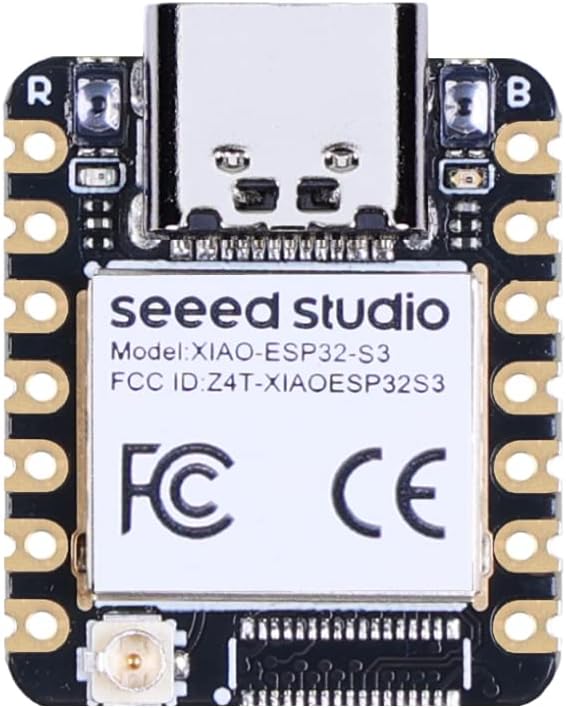
The Seeed XIAO ESP32S3 brings massive power to a thumb-sized footprint. It is rated 4.7 for its ability to integrate into wearable tech and compact devices.
We may earn a commission when you buy through this link, at no additional cost to you.
This board supports deep sleep modes as low as 14uA. This extreme efficiency ensures battery-powered projects can last for months or even years on a single charge.
The built-in lithium battery charge management simplifies power systems. You do not need external charging modules, making the design cleaner and more portable.
Best suited for robotics and smart home sensors, this board balances size and functionality perfectly. Its classic XIAO form factor fits well in tight enclosures.
Deep sleep modes enable long battery life for remote sensors and wearables.
The small design makes it ideal for projects where space is extremely limited.
We may earn a commission when you buy through this link, at no additional cost to you.
The ESP32-P4-NANO is a specialized board designed for advanced media applications. It earns a 4.8 rating for its unique ability to handle image and voice processing tasks.
We may earn a commission when you buy through this link, at no additional cost to you.
Equipped with RISC-V processors, this board offers a different architecture than standard ESP32s. It includes interfaces like MIPI-CSI and MIPI-DSI, essential for connecting cameras and displays.
Security features like secure boot and flash encryption are hardware-accelerated. This makes it suitable for projects requiring strict data privacy or industrial control.
Select this board if your project involves visual data or complex human-machine interfaces. It bridges the gap between microcontrollers and high-performance embedded systems.
MIPI interfaces allow direct connection to cameras and high-resolution displays.
Hardware-level encryption ensures secure communication and data storage.
We may earn a commission when you buy through this link, at no additional cost to you.
The Waveshare 3PCS ESP32-S3 offers excellent value for distributed projects. With a 4.4 rating, it is perfect for deploying multiple sensors across a network.
We may earn a commission when you buy through this link, at no additional cost to you.
Each board features the ESP32-S3FH4R2 chip with dual-core processing. You can solder the castellated edges directly to carrier boards for compact designs.
Independent power supply settings allow for flexible energy management. This is useful when you need to power devices differently or conserve energy in specific modules.
Ideal for smart home automation where multiple nodes are needed. Buying three at once reduces costs and simplifies sourcing for larger deployments.
Get three fully functional boards in one purchase, saving time and money.
Castellated pads allow direct soldering onto custom carrier boards.
We may earn a commission when you buy through this link, at no additional cost to you.
The ELEGOO ESP-32 Super Starter Kit provides everything needed to start IoT projects. It is rated 4.3 for its educational value and range of included parts.
We may earn a commission when you buy through this link, at no additional cost to you.
This kit includes over 35 modules like sensors, displays, and motors. You can build weather stations or smart home controllers without buying extra items.
Step-by-step tutorials guide you from basic circuits to advanced applications. This structured approach helps beginners understand electronics and coding quickly.
Perfect for students and hobbyists new to embedded systems. The kit offers a solid foundation for learning the ESP32 platform without technical barriers.
Detailed tutorials and code examples make it easy to follow along.
Includes everything from LEDs to motors for varied project types.
We may earn a commission when you buy through this link, at no additional cost to you.
The Arduino Nano 33 IoT focuses heavily on security and stability. It earns a 4.5 rating for ensuring safe data transmission in connected projects.
We may earn a commission when you buy through this link, at no additional cost to you.
It includes a u-blox ATECC608A Secure Element for hardware-level encryption. This ensures that your data remains private during cloud communication.
Powered by an ARM Cortex-M0+ processor, it runs efficiently at 48 MHz. While slower than newer chips, it offers reliability for standard IoT tasks.
Ideal for professional or industrial applications where security is paramount. The pre-soldered headers make it easy to integrate into existing systems.
Secure element ensures encrypted data transmission for IoT devices.
Built-in Wi-Fi and BLE support seamless cloud connections.
We may earn a commission when you buy through this link, at no additional cost to you.
The ESP-WROOM-32 Development Board offers a proven and reliable platform for general IoT projects. It is rated 4.4 for its widespread compatibility and stability.
We may earn a commission when you buy through this link, at no additional cost to you.
Each package includes three boards, providing excellent value for batch projects. The integrated antenna ensures good signal strength for standard wireless tasks.
It supports ultra-low power modes, making it suitable for battery devices. You can configure AP, STA, or mixed modes for flexible network connections.
Choose this for basic automation or learning the ESP32 platform. It remains a solid choice for standard projects that do not need the latest features.
The classic ESP32 architecture ensures compatibility with a wide range of libraries.
Switch between Access Point and Station modes easily.
We may earn a commission when you buy through this link, at no additional cost to you.
The ELEGOO 3PCS ESP-32 brings modern connectivity to a classic board. It earns a 4.7 rating for combining high quality with an affordable price point.
We may earn a commission when you buy through this link, at no additional cost to you.
Equipped with USB-C and CP2102 chips, uploading sketches is faster and easier. This update over older micro-USB boards improves the user experience significantly.
Over-the-Air update support allows you to change firmware remotely via Wi-Fi. This saves time when maintaining deployed sensors or nodes in the field.
Ideal for home automation or sensor networks requiring multiple nodes. You can afford to deploy several units without breaking your budget.
USB-C simplifies connections and allows for faster sketch uploads.
OTA support ensures you can update firmware without physical access.
We may earn a commission when you buy through this link, at no additional cost to you.
The Arduino UNO R4 WiFi is a powerful evolution of the classic UNO. It is rated 4.7 for its comprehensive features and modern connectivity.
We may earn a commission when you buy through this link, at no additional cost to you.
It combines the Renesas RA4M1 and ESP32-S3 chips for dual-core processing. This allows you to handle complex logic while managing wireless connections efficiently.
The built-in 12×8 LED matrix provides instant visual feedback. Plus, the 12-bit DAC and OP-AMP support precise analog signal generation.
Best for industrial or advanced projects. It bridges the gap between basic prototyping and professional embedded development with robust industrial features.
12-bit DAC and OP-AMP allow for high-precision analog signal control.
The built-in LED matrix displays status and data without external screens.
We may earn a commission when you buy through this link, at no additional cost to you.
Selecting the right board depends on your project requirements, budget, and technical expertise. Here are the critical factors to consider before buying.
The processing power of a board dictates how complex your applications can be. Boards with ESP32-S3 or RISC-V chips offer higher clock speeds and better multitasking capabilities for real-time data processing.
Look for dual-core processors if you need to handle wireless communication and logic tasks simultaneously without lag.
Memory determines how much code and data your board can store. Flash memory holds your firmware, while SRAM handles active variables. High PSRAM is crucial for image or audio applications.
Ensure the board has at least 4MB Flash for standard IoT apps, and more if you plan to use large libraries or store data locally.
Wireless capabilities are the main reason to choose an ESP32 board. Check if the board supports Wi-Fi, Bluetooth 5.0, or older BLE standards based on your project needs.
Advanced boards may offer Ethernet or CAN bus support for industrial applications requiring stable or vehicle-specific communication.
Battery life is critical for portable devices. Look for features like deep sleep modes and low current consumption in standby. Some boards include built-in battery charging circuits for lithium cells.
Prioritize boards with power-saving features if your project needs to run for months on a single battery charge.
Ease of coding depends on the programming languages supported. Arduino IDE is universal, but MicroPython support allows for faster scripting and easier learning for beginners.
Choose a board that supports both C++ and Python if you need flexibility for rapid prototyping and complex logic implementation.
Size and connector type matter for integration. Compact boards like XIAO fit in wearables, while standard sizes fit breadboards. USB-C is preferred for durability and faster data transfer.
Check for extra connectors like Qwiic or HDMI interfaces if you plan to use specific sensors or displays without custom wiring.
For projects involving sensitive data, hardware security is essential. Secure elements or hardware encryption ensure that cloud communication remains private and tamper-proof.
Select boards with secure boot and flash encryption if you are deploying commercial products or handling personal user information.
Official Arduino boards come with extensive documentation and community support. Third-party boards might offer better prices but could lack comprehensive libraries or troubleshooting guides.
Consider the availability of tutorials and community forums to ensure you can solve problems quickly during development.
Before connecting the board, ensure you have the necessary USB cable and installed drivers. Most boards use a CP2102 or CH340 USB-to-Serial converter that requires specific drivers on your computer.
Install the Arduino IDE or MicroPython IDE to start coding. Select the correct board type from the tools menu to ensure proper upload settings. Upload a simple blink sketch to verify functionality.
Protect the board from static electricity and excess voltage when soldering. If using external power, check the voltage regulator limits to avoid burning the chip. Always disconnect power before modifying the circuit.
Most ESP32-S3 boards support MicroPython, but you must flash the firmware manually if it is not pre-installed. Check the product specifications for native support to avoid extra setup steps.
The ESP32-S3 has a faster dual-core processor, more memory, and better AI instructions than the classic ESP32. It also supports newer Bluetooth versions and better USB interfaces.
Many ESP32 boards support OTA updates via Wi-Fi. This allows you to update firmware remotely, which is useful for devices deployed in hard-to-reach locations.
Arduino Nano ESP32 or ELEGOO starter kits are best for beginners due to official support and tutorials. They simplify the setup process and offer stable libraries.
Yes, most boards have low-power sleep modes. Boards with built-in battery charging like XIAO simplify power management for portable projects.
Yes, the R4 WiFi maintains pin compatibility with standard Arduino shields. It adds features like Wi-Fi and CAN while keeping the traditional shield ecosystem.
The Arduino Nano ESP32 offers a powerful platform for IoT development. From the budget-friendly ESP32-S3-Nano to the premium UNO R4, there is a board for every skill level.
Prioritize performance and memory if you need complex processing. Choose compact boards for wearables and security features for commercial applications.
Always check current prices and stock before purchasing. This guide helps you understand the options so you can make an informed decision for your next project.