
GIGABYTE B650 AORUS Elite AX
4.4Editor score
14+2+1 Power Phase
PCIe 5.0 M.2
WIFI6E connectivity
Discover the top motherboards for neural network workloads. This guide compares ten models based on power delivery, connectivity, AI features, and stability
Selecting the right motherboard for neural network tasks requires careful consideration of power delivery and connectivity. High performance computing needs stable VRMs and fast data lanes to handle intensive training cycles without throttling.
We evaluated ten leading models focusing on chipset capabilities, memory support, and expansion options. Each product offers unique strengths for AI workloads ranging from entry level prototyping to enterprise grade deployment scenarios.
This list highlights standout features and real world performance indicators for each pick. Prices fluctuate regularly so verify current offers before purchasing to ensure you get the best value for your specific compute requirements.
4.4Editor score

4.4Editor score

3.6Editor score
This side-by-side comparison outlines the critical specifications for each model to help you identify the best fit for your neural network development environment.


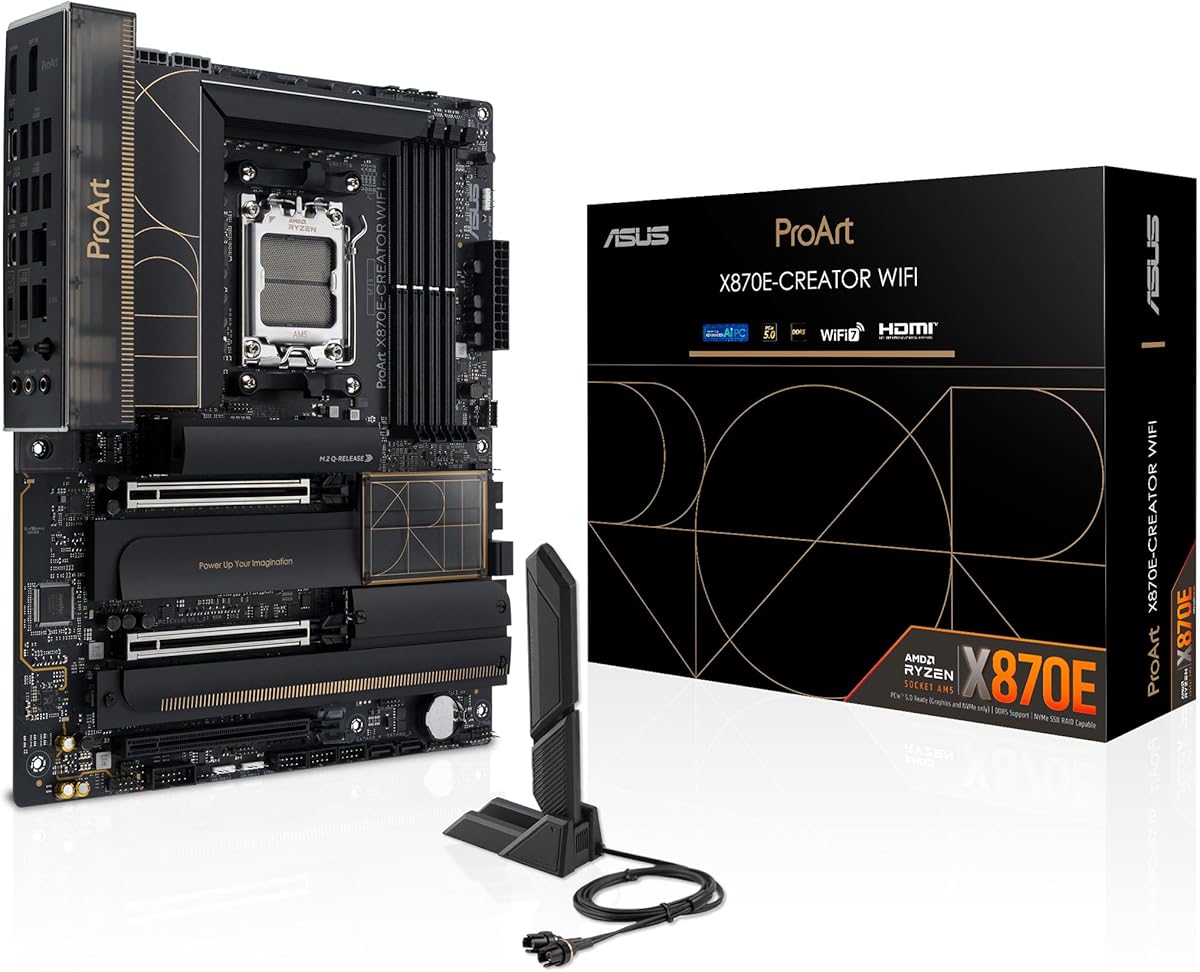


This motherboard stands out as the Editor's Choice for advanced AI workstations needing reliable power and connectivity. It features a 16+2+1+2 power stage design that ensures stable performance under heavy neural network loads.
We may earn a commission when you buy through this link, at no additional cost to you.
The inclusion of Thunderbolt 5 Type-C ports provides exceptional bandwidth for external storage or GPU expansion. AI Overclocking and AI Cooling II features automatically optimize system performance without manual intervention.
While the price reflects its premium positioning, the durability and feature set justify the investment for serious developers. It balances workstation needs with creator tools effectively.
Buyers focused on professional AI development will find this board delivers consistent results. It is highly recommended for those needing maximum stability and future proof connectivity.
AI OC technology adjusts voltage and clock speeds based on workload demands automatically.
ProArt Creator Hub offers color management and system monitoring tailored for creators.
We may earn a commission when you buy through this link, at no additional cost to you.
This board earns the Best Budget badge by offering solid performance without breaking the bank. It supports AMD Ryzen 9000 series processors with a robust 14+2+1 power phase design.
We may earn a commission when you buy through this link, at no additional cost to you.
Connectivity includes WiFi6E and a PCIe 5.0 M.2 slot which are essential for modern data throughput. The 2.5GbE Ethernet ensures stable network links for distributed training tasks.
It might lack some extra slots found on higher end boards but meets most core needs. Builders prioritizing value will appreciate the balance of features and cost.
Ideal for students or startups starting neural network projects this board delivers essential capabilities. It provides a strong foundation for learning and development work.
Features WiFi6E and 2.5GbE LAN to ensure fast network performance.
Includes PCIe 5.0 M.2 for next generation NVMe SSD speeds.
We may earn a commission when you buy through this link, at no additional cost to you.
This workstation motherboard is the Best Premium option for users needing massive compute power. It supports AMD Ryzen Threadripper PRO processors with 36 power stages for unmatched stability.
We may earn a commission when you buy through this link, at no additional cost to you.
Multi-GPU support allows for scaling up model training across several accelerators. ECC memory support ensures error correction which is critical for reliable scientific computing.
The price is significant and it is built for specialized workloads rather than general use. However for serious research labs it offers capabilities few other boards match.
Those building enterprise level neural clusters should consider this board for its robustness. It provides the reliability needed for uninterrupted high performance computing.
ECC memory and 36 power stages ensure data integrity under load.
Multiple PCIe 5.0 slots enable simultaneous GPU training tasks.
We may earn a commission when you buy through this link, at no additional cost to you.
This board targets AI Ready systems with robust power delivery and modern connectivity. It features 14+2+1 80A stages ensuring reliable power to the CPU during training.
We may earn a commission when you buy through this link, at no additional cost to you.
Wi-Fi 7 support reduces latency which is useful for distributed training environments. The three M.2 slots allow for large datasets to be stored locally.
It balances gaming aesthetics with professional utility making it versatile for many users. The USB 20Gbps Type-C ensures fast data transfer for external drives.
Buyers needing solid performance without workstation pricing will find it appealing. It supports high end Ryzen processors effectively for development work.
AI Ready label indicates firmware tuned for AI application workflows.
Wi-Fi 7 ensures rapid data transfer for cloud training.
We may earn a commission when you buy through this link, at no additional cost to you.
This model offers full support for next gen GPUs making it ideal for heavy training. It features 16+2+2 power stages to maintain stability during long sessions.
We may earn a commission when you buy through this link, at no additional cost to you.
Dual USB4 ports provide high speed connections for external GPUs or storage. Four M.2 slots ensure you have enough room for datasets without bottlenecks.
WiFi 7 and 10 Gb LAN offer excellent networking options for cloud sync. It is a strong choice for creators needing both GPU power and storage.
Users requiring maximum expansion options will appreciate its design. It supports high end Ryzen processors with robust stability.
Four M.2 slots allow for multiple fast NVMe drives.
Dual USB4 ports enable diverse high speed external devices.
We may earn a commission when you buy through this link, at no additional cost to you.
This board provides stable SPS power stages ideal for neural network work. It features 16+2+1 design for reliable power delivery to high end CPUs.
We may earn a commission when you buy through this link, at no additional cost to you.
USB4 40Gbps ensures rapid data transfer for large model checkpoints. Four M.2 slots allow ample space for multiple high speed SSDs.
Wi-Fi 7 and AI Overclocking tools improve setup and maintenance ease. It is a solid choice for stable development environments.
Users needing consistent power will find it well suited for training tasks. It balances performance with practical storage options effectively.
16+2+1 SPS stages maintain CPU stability under load.
USB4 40Gbps enables fast external storage access.
We may earn a commission when you buy through this link, at no additional cost to you.
This board supports DDR5 Memory Boost speeds ideal for high bandwidth datasets. It features Core Boost architecture for stable power delivery to Ryzen CPUs.
We may earn a commission when you buy through this link, at no additional cost to you.
PCIe 5.0 x16 ensures full GPU bandwidth for training models. Wi-Fi 7 provides low latency networking for cloud data transfers.
Extended Heatsink design helps manage heat during long compute tasks. It is well suited for high performance gaming and development.
Users prioritizing memory speed will find this board appealing. It supports fast storage and networking effectively.
DDR5 Memory Boost enables fast data access speeds.
Extended Heatsink helps prevent overheating under load.
We may earn a commission when you buy through this link, at no additional cost to you.
This board is Advanced AI PC ready to streamline setup for neural tasks. It supports AMD AM5 processors with PCIe 5.0 for future GPU expansion.
We may earn a commission when you buy through this link, at no additional cost to you.
USB 10Gbps Type-C and three M.2 slots ensure fast data handling. WiFi 6E maintains reliable wireless connectivity for development.
The white PCB offers a distinct aesthetic for custom builds. It balances AI readiness with practical storage options.
Users seeking a unique build with AI focus will like it. It provides solid foundation for AI development.
Advanced AI PC ready helps streamline neural software setup.
USB 10Gbps Type-C enables rapid external storage access.
We may earn a commission when you buy through this link, at no additional cost to you.
This PRO design offers value with strong DDR5 support. It enables speeds up to 8200+ MT/s for efficient data throughput.
We may earn a commission when you buy through this link, at no additional cost to you.
PCIe 5.0 x16 and M.2 Gen5 slot provide fast data links. Wi-Fi 7 ensures low latency connections for modern networks.
The affordable price makes it accessible for smaller projects. It supports Ryzen 9000 series effectively.
Users seeking cost effective high speed memory support will find it useful. It delivers solid performance for the price.
DDR5 Memory Boost allows for rapid data access.
M.2 Gen5 slot provides next gen storage speeds.
We may earn a commission when you buy through this link, at no additional cost to you.
This motherboard offers server grade features like IPMI remote management. It supports up to 96-core CPUs with 36 power stages.
We may earn a commission when you buy through this link, at no additional cost to you.
ECC memory support ensures data integrity for long compute runs. 10 Gb LAN and multi-GPU support enable high end clusters.
It is a niche board for labs needing maximum reliability. The features justify the cost for professional workloads.
Users needing enterprise stability should consider it for their build. It provides robust foundation for serious AI research.
ECC R-DIMM support ensures data reliability during training.
IPMI management allows remote monitoring and control.
We may earn a commission when you buy through this link, at no additional cost to you.
Selecting the right motherboard requires evaluating power delivery, connectivity, and memory support for your specific neural network workloads.
Power delivery determines how stable your system remains under heavy load. Look for boards with robust VRMs featuring multiple power stages to ensure consistent CPU performance during long training cycles.
Prioritize boards with high amp stages for reliable stability.
Neural network models often require large amounts of system RAM. Ensure the motherboard supports DDR5 and has enough DIMM slots to accommodate your desired capacity.
Choose boards supporting up to 1TB memory for large datasets.
Fast data transfer is essential for moving training datasets between storage and RAM. Look for PCIe 5.0 support for storage and high speed USB ports for external drives.
Ensure sufficient USB and M.2 slots for fast data access.
Distributed training benefits from stable and low latency connections. WiFi 7 or 10 Gb Ethernet ensures rapid data synchronization for cloud training.
Prioritize high speed LAN for reliable network connections.
Some boards include AI specific features like Overclocking or Cooling tools. These can simplify performance tuning and reduce manual intervention during long training tasks.
Check for AI Overclocking and AI Cooling features for ease.
Future proofing often involves adding more GPUs or storage. Ensure there are enough PCIe slots to support multiple GPUs if needed.
Confirm PCIe 5.0 slots for next generation GPU support.
Efficient cooling prevents throttling during long compute sessions. Look for massive VRM heatsinks and M.2 thermal guards.
Ensure adequate heatsinks to maintain performance under load.
User friendly BIOS allows for easier tuning. Look for intuitive dashboards and remote management options for server setups.
Check BIOS tools for easy performance optimization.
Begin by installing the CPU and memory modules carefully to avoid bent pins. Ensure the VRM heatsink is properly seated to guarantee stable power delivery.
Connect your NVMe SSDs to PCIe 5.0 slots for fastest data throughput. Verify all Ethernet and USB connections for reliable peripherals.
Regularly clean dust from vents and monitor temperatures using provided tools. Keep the BIOS updated for security and performance optimizations.
For neural network workloads, a robust power phase design like 14+2+1 or higher is recommended. This ensures stable voltage delivery during long training sessions.
Yes, WiFi 7 offers lower latency and higher speeds which helps with data transfers. It reduces bottlenecks when syncing datasets to cloud servers.
Three to four slots are usually sufficient to store multiple large datasets on fast SSDs. This prevents bottlenecks when swapping training sets.
ECC memory helps prevent errors during long training cycles which can corrupt results. It is recommended for critical research and scientific workloads.
AI Overclocking automatically adjusts performance based on workload demand. This helps optimize CPU efficiency without manual tuning.
Yes, workstation boards support multiple GPUs which is ideal for clustering. Ensure your case and power supply can handle the additional load.
Use the BIOS Flashback feature to update without installing CPU. Always follow manufacturer instructions to avoid corruption.
Look for massive VRM heatsinks with high quality thermal pads. This ensures components stay cool during sustained high load.
This guide highlighted ten top motherboards ranging from budget friendly to enterprise grade options. The ASUS ProArt Z890-CREATOR WIFI leads for its advanced features and stability.
Prioritize power delivery and connectivity options that match your specific workload requirements. Stability and speed are critical when dealing with long training sessions.
Remember to check current pricing and availability as deals fluctuate regularly. Selecting the right board sets a strong foundation for your AI development success.