
Wireless Digital Microscope Skybasic 50X-1000X
4.2Editor score
WiFi and USB connectivity
Portable handheld design
Adjustable LED lighting
This guide compares the top microscope camera for documenting samples, evaluating features like resolution, connectivity, and ease of use for accurate sample
Documenting microscopic samples requires precision and clarity to ensure accurate analysis and sharing. A high-quality microscope camera captures detailed images and videos, making it essential for researchers, hobbyists, and educators.
We compared ten leading models based on resolution, connectivity options, ease of use, and overall performance. Our analysis covers handheld devices, digital microscopes, and dedicated camera attachments for various microscope types.
Each pick highlights unique strengths and ideal use cases to help you choose the right tool. Note that specifications and availability may change, so verify details before purchasing.
4.2Editor score

4.4Editor score

4.6Editor score
This side-by-side comparison evaluates all ten models across key specifications to highlight differences in magnification, screen size, and connectivity options for diverse documentation needs.



The Elikliv EM4K-AF stands out as the top choice for documenting samples with its revolutionary 4K resolution and auto-focus capabilities. Rated 4.4 stars, it offers unmatched clarity for both video and imaging needs.
We may earn a commission when you buy through this link, at no additional cost to you.
Its TOF sensor ensures quick and accurate focus adjustments in seconds, making it ideal for moving samples. The 8-inch IPS screen provides vibrant colors and a wide viewing angle for detailed analysis.
While the price is higher than handheld options, the professional features justify the investment. The rechargeable battery adds portability for field inspections without power constraints.
Researchers and serious hobbyists will appreciate the comprehensive feature set. This microscope camera delivers precision and ease of use for accurate sample documentation.
The AI algorithm continuously assesses image clarity, refocusing automatically for moving objects and ensuring sharp results every time.
Built-in battery and HDMI/USB outputs allow for seamless transitions between lab, classroom, and outdoor inspection tasks.
We may earn a commission when you buy through this link, at no additional cost to you.
This Skybasic model offers an affordable entry point for documenting samples, rated 4.2 stars for its versatility and ease of use. It connects via WiFi to mobile devices or USB to computers.
We may earn a commission when you buy through this link, at no additional cost to you.
The 1080P resolution provides clear images for basic inspection tasks. Eight adjustable LED lights ensure optimal clarity in various environments without additional equipment.
Keep in mind it is a digital magnifier rather than a traditional microscope. It is best suited for casual exploration and educational purposes rather than serious scientific work.
For students or hobbyists needing portable documentation, this camera delivers value. It balances functionality and cost effectively for sample imaging.
Switch between mobile app control and direct computer connection to suit your documentation workflow and device preferences.
Its lightweight design makes it easy to carry for outdoor field trips or classroom demonstrations anywhere.
We may earn a commission when you buy through this link, at no additional cost to you.
Rated 4.6 stars, this trinocular microscope represents the pinnacle of sample documentation for professional and advanced users. It combines high-quality optics with a USB camera for digital output.
We may earn a commission when you buy through this link, at no additional cost to you.
The mechanical stage allows precise X-Y movement for detailed specimen examination. The USB camera enables live streaming and recording for sharing with large audiences or archives.
It requires a stable setup and familiarity with microscope operation. However, the clarity and magnification capabilities are unmatched for cellular or tissue analysis.
Ideal for labs or serious enthusiasts, this system ensures accurate documentation. It is a long-term investment for high-standard sample imaging.
Multiple achromatic objectives overcome imaging defects, providing clearer and sharper images than standard objectives.
Variable diaphragm and Abbe condenser optimize light for ideal clarity across various sample types.
We may earn a commission when you buy through this link, at no additional cost to you.
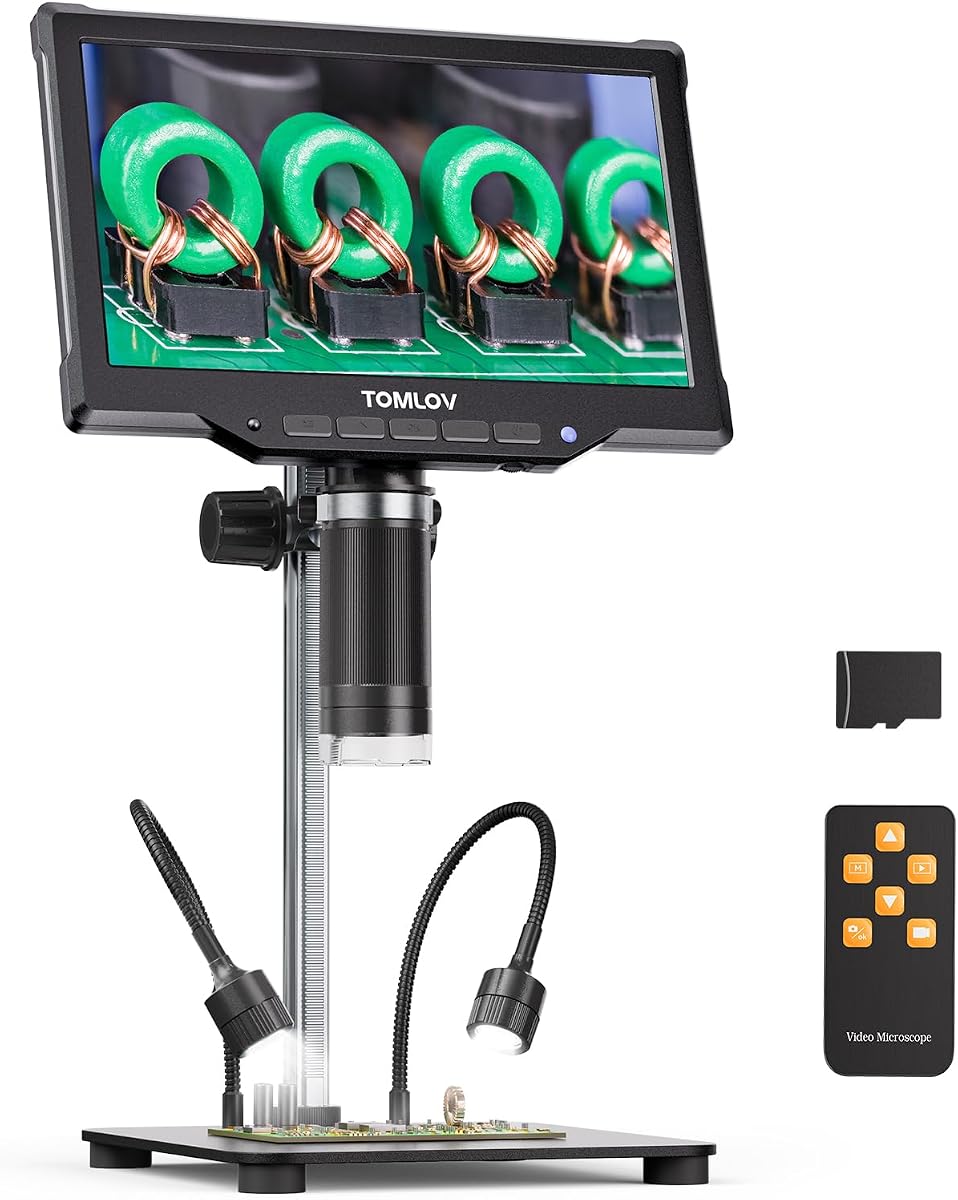
The TOMLOV DM9 is designed for detailed inspection with a 12MP camera and 1080P video recording. Rated 4.4 stars, it excels in coin and electronics documentation.
We may earn a commission when you buy through this link, at no additional cost to you.
Its 7-inch LCD screen provides comfortable viewing for extended periods. The metal base offers stability for hands-on tasks like soldering or component inspection.
The included 16GB memory card allows direct storage without external devices. However, the setup is less portable compared to handheld options.
Best for stationary use in workshops or hobby areas, this microscope delivers clarity. It is a reliable tool for documenting small parts and collections.
The 7-inch display reduces eye strain during detailed observation and shared demonstrations.
Save photos and videos directly to the included card for easy access and transfer later.
We may earn a commission when you buy through this link, at no additional cost to you.
This model features a 10.1-inch IPS screen for exceptional visibility. Rated 4.4 stars, it supports wireless remote control for shake-free captures.
We may earn a commission when you buy through this link, at no additional cost to you.
The 1200X magnification range allows detailed inspection of coins and small components. Its battery lasts up to three hours, reducing interruptions.
The remote control ensures stable images during recording. While bulkier than handheld units, the large screen is a significant advantage for analysis.
Ideal for coin collectors and electronics hobbyists, this microscope balances size and functionality. It simplifies documentation for precision work.
Avoid sample movement by capturing images and videos without touching the microscope during operation.
Up to three hours of use allows thorough inspection sessions without frequent recharging.
We may earn a commission when you buy through this link, at no additional cost to you.
The Swift camera offers a 5MP sensor with up to 30 frames per second for smooth motion. Rated 3.9 stars, it is compatible with various microscope eyepieces.
We may earn a commission when you buy through this link, at no additional cost to you.
Its Sony back-illuminated sensor ensures high sensitivity and low noise for quality photos. It fits standard 23.2mm, 30mm, and 30.5mm tubes.
Setup requires software installation via the included USB disk. This is an attachment rather than a standalone device, needing a traditional microscope.
Best for existing lab setups, this camera enhances documentation. It is suitable for instructors and clinicians needing reliable image capture.
The high frame rate ensures smooth motion for live streaming and video recording of moving samples.
Adapters allow integration with multiple microscope models for flexible lab use.
We may earn a commission when you buy through this link, at no additional cost to you.
Rated 4.5 stars, this microscope includes three lenses for soldering, coin viewing, and biological slides. It captures UHD 2160P video for clear documentation.
We may earn a commission when you buy through this link, at no additional cost to you.
The HDMI output connects to larger monitors for demonstrations. It comes with professional measurement software for calculating object dimensions and areas.
Switching lenses requires simple screw adjustments. The boom arm stand provides flexibility for various sample sizes and tasks.
Ideal for diverse applications from electronics to biology, this model is versatile. It supports educational and hobby documentation with ease.
Three lenses cover multiple inspection needs, from detailed electronics to biological slide observation.
Download professional software to measure objects and analyze dimensions directly from the feed.
We may earn a commission when you buy through this link, at no additional cost to you.
This binocular microscope supports biology and chemistry studies with a USB 2.0 eyepiece for photos. Rated 4.1 stars, it offers six magnification settings.
We may earn a commission when you buy through this link, at no additional cost to you.
The dual light source enables viewing of various object types with high resolution. Coaxial and fine focus knobs ensure precise image sharpness.
It combines traditional optical benefits with digital capture capabilities. Setup requires careful alignment for optimal results.
Best for educational use and basic research, this system provides reliable documentation. It balances traditional viewing with digital recording.
Dual eyepieces reduce eye strain during extended observation sessions.
Dual sources allow illumination from different angles for better specimen visibility.
We may earn a commission when you buy through this link, at no additional cost to you.
This compound microscope offers up to 5000X magnification using a 2X Barlow lens. Rated 3.3 stars, it provides simultaneous manual and digital viewing.
We may earn a commission when you buy through this link, at no additional cost to you.
The trinocular port allows attachment of the included 2MP camera. The double-layer mechanical stage ensures accurate slide movement.
Setup is intricate and requires careful calibration for best results. It is designed for schools, labs, and home studies.
While it has high magnification potential, user ratings suggest a learning curve. It is suitable for detailed cellular observation.
Expand to 5000X with the Barlow lens for detailed cellular structure observation.
Observe manually while recording digitally without interrupting the viewing flow.
We may earn a commission when you buy through this link, at no additional cost to you.
The Swiftcam offers a massive 25MP sensor for detailed imaging. Rated 3.8 stars, it connects via USB 3.0 for fast data transfer.
We may earn a commission when you buy through this link, at no additional cost to you.
The reduction lens ensures the field of view matches microscope magnification accurately. A calibration kit allows for precise measurements.
It is an attachment for trinocular ports or eyetubes, needing a compatible microscope. Software is required for full functionality.
Best for high-end documentation where resolution is critical, this camera delivers. It supports Windows, Mac, and Linux systems.
Capture images with 25 megapixels for exceptional detail in still frames.
USB 3.0 connection ensures quick transfers of large image and video files.
We may earn a commission when you buy through this link, at no additional cost to you.
Selecting the right microscope camera involves evaluating resolution, connectivity, and use cases to meet documentation needs.
Resolution determines the clarity and detail captured in images and videos. For documenting samples, aim for at least 1080P HD for basic use, but consider 4K or 2160P for professional needs. Higher resolution ensures fine details are visible for accurate analysis.
Prioritize cameras with sensors that support high megapixels and clear video output for reliable documentation.
Connectivity affects how easily you can capture and transfer data. WiFi allows wireless transfer to mobile devices for quick sharing, while USB offers stable connections to computers for analysis. HDMI outputs enable larger viewing on external monitors for demonstrations.
Choose a camera with multiple connectivity options to fit your workflow and device ecosystem.
Magnification ranges vary from 5X to 5000X depending on the model. Handheld units often offer lower magnification for casual use, whereas professional microscopes reach higher levels for cellular observation. Ensure the range matches your sample types.
Select a device with a range that covers your smallest and largest inspection needs.
Design impacts how easily the device can be used in different settings. Handheld and battery-powered models are ideal for field trips, while table-top units suit stationary labs. Consider size and weight for storage and transport.
Balance portability with stability based on whether you move or document samples in one location.
Proper lighting is essential for clear images. Adjustable LED lights around the lens reduce shadows and glare for better detail. Dual or flexible lighting options help illuminate samples from multiple angles.
Opt for models with adjustable brightness and multiple light sources to enhance image quality.
Software supports measurement, photo capture, and video recording. Some models include tools for calculating dimensions or analyzing data. Ease of use and compatibility with your operating system are critical factors.
Check software features to ensure they meet your documentation and analysis requirements.
Prices range widely based on capabilities. Handheld devices are more affordable, while trinocular microscopes represent a larger investment. Determine your priorities to find the best value for your needs.
Invest in a model that offers the necessary features without unnecessary complexity.
Begin by properly assembling the device and ensuring all connections are secure. For handheld models, charge the battery fully before use to avoid interruptions during documentation.
Adjust the lighting and focus to optimize image clarity before capturing. Use the remote control or app to take photos without shaking the device for stable results.
Store the camera in a dry, cool place to prevent lens damage. Clean the lens gently with a microfiber cloth to remove dust and maintain image quality.
For most applications, 1080P HD is sufficient, but 4K provides better detail for professional use. Higher resolution ensures fine structures are captured clearly for accurate analysis and sharing.
Yes, many models include adapters for standard eyepieces or trinocular ports. Check compatibility with your microscope type before purchasing an attachment camera.
Use USB cables for direct transfers or WiFi for wireless sharing via mobile devices. Some models also support external storage like SD cards for additional flexibility.
Many cameras support live streaming via USB or HDMI connections. Ensure your software and computer specifications support the frame rate and resolution required.
Accessories vary by model but often include mounting stands, memory cards, and software. Some kits provide additional lenses or tools for enhanced functionality.
Clean the lens with a soft, dry microfiber cloth. Avoid harsh chemicals and store the device in a protective case to prevent dust and scratches.
Simple handheld models are suitable for children with supervision. They are excellent for educational purposes to observe plants, insects, and everyday objects.
Battery life varies but ranges from 2 to 5 hours depending on usage. Some models offer USB charging options for extended use without interruptions.
Choosing the right microscope camera depends on your specific needs and budget. The Elikliv EM4K-AF leads in resolution, while the Skybasic offers affordability for casual use.
Prioritize features like connectivity and ease of use to streamline your documentation workflow. Consider where you will use the camera to determine portability requirements.
Always verify current specifications and availability as they may change. Selecting a model that balances quality and functionality will ensure accurate sample documentation.