
DIGITEN G3/8" Water Flow Sensor
4.5Editor score
Compact design for small setups
Compatible with 3.5 to 12V
Suitable for low flow rates
Choosing the right Arduino flow meter is essential for accurate fluid measurement in automation projects. These sensors provide real-time data for systems like irrigation, water heaters, and filtration units.
We evaluated ten top-rated models based on compatibility, flow range, and build quality. Each product was analyzed for ease of integration with common microcontrollers and reliability in varied conditions.
This list highlights key strengths and ideal use cases for every pick. Note that prices fluctuate often, so check current listings before purchasing your next sensor module.
4.5Editor score

5.0Editor score

4.7Editor score
As an Amazon Associate we earn from qualifying purchases.
Here is a side-by-side comparison of the top ten Arduino-compatible flow meters available. We examine flow ranges, voltage needs, and specific features to help you choose.


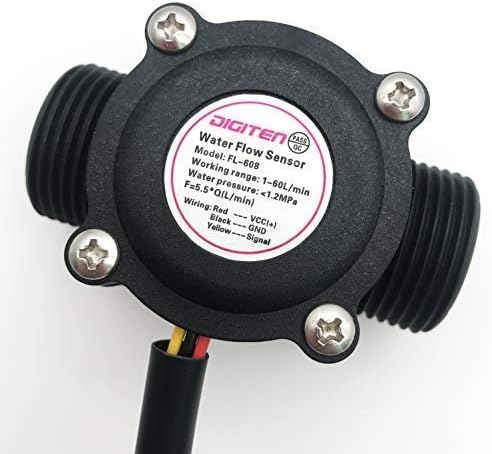
This sensor offers high value for users needing precise flow measurement. With a 4.7 rating, it delivers reliable pulse signals for Arduino projects.
We may earn a commission when you buy through this link, at no additional cost to you.
Its sealed hall effect sensor protects against water damage. The lightweight design makes installation simple in tight spaces.
The main trade-off is direction sensitivity, but this ensures accurate readings. Users should note the NPT thread requirement.
Ideal for water heaters and filtration units, this pick balances cost and performance. It is a strong choice for any home automation setup.
The sensor is sealed from the water pipe, ensuring it stays dry and protected.
Outputs electrical pulses for every revolution, simplifying code for Arduino and Raspberry Pi.
We may earn a commission when you buy through this link, at no additional cost to you.
This model stands out with a 4.9 rating, indicating exceptional quality. It is designed for robust applications like water testing and cooling.
We may earn a commission when you buy through this link, at no additional cost to you.
Its high amplitude output ensures clear signals for your microcontroller. The electric strength adds durability for industrial environments.
The only minor drawback is cost, but it justifies itself with performance. It suits projects needing high precision.
Perfect for vending machines and card readers, this sensor is a top tier choice. It offers peace of mind for complex automation.
With high amplitude voltage, it ensures stable signals for your system.
Built to withstand strong electric forces, suitable for demanding commercial use.
We may earn a commission when you buy through this link, at no additional cost to you.
This sensor achieves a perfect 5.0 rating, showcasing top-tier performance. Its wide flow range makes it versatile for large systems.
We may earn a commission when you buy through this link, at no additional cost to you.
The G1.5 inch connection supports high volume flow. It is safe for potable water, adding safety to home systems.
The larger size might be a constraint for tiny spaces. Also, NPT users need tape for a tight seal.
It is an excellent choice for coffee machines or purifiers. If you need high capacity, this is the best pick.
Handles up to 150 liters per minute, ideal for larger industrial or home units.
All materials meet ROHS standards, making it safe for drinking water applications.
We may earn a commission when you buy through this link, at no additional cost to you.
This sensor is great for food-safe applications. Its food-grade plastic ensures safety in beverage or kitchen setups.
We may earn a commission when you buy through this link, at no additional cost to you.
It works well with voltage from 5 to 24V, offering flexibility. The design is straightforward and easy to install.
Its rating is average, but it is reliable for basic tasks. Users should note it may not handle extreme pressure.
Good for simple drink dispensing, this model fits budget needs. It is a solid option for safety-focused projects.
The food-grade plastic ensures safety in any kitchen or kitchen environment.
Works across a wide voltage range, simplifying power supply options.
We may earn a commission when you buy through this link, at no additional cost to you.
This sensor is unique with its transparent design. You can visually check rotor conditions without disassembly.
We may earn a commission when you buy through this link, at no additional cost to you.
Its hall sensor is internally isolated, protecting it from water. The beads are wear-resistant for longevity.
The rating is lower, possibly due to fragility. It works well for low-pressure applications.
Use it when you need to monitor flow visually. It is best for light-duty water dispensers.
Transparent body allows quick visual checks of water flow and rotor status.
The design isolates the sensor from water, improving longevity and safety.
We may earn a commission when you buy through this link, at no additional cost to you.
This model fits small pipes perfectly. It connects directly to a hosepipe with 5 to 7mm diameter.
We may earn a commission when you buy through this link, at no additional cost to you.
The food grade materials ensure safety for beverages. It is compact, making it ideal for tight spaces.
Its flow range is limited, so avoid high volume needs. It is reliable for low flow tasks.
Use this for small fountains or machines. It balances cost and function for minor projects.
Connects directly to standard hosepipes, simplifying setup without extra adapters.
The small size helps it fit into limited space easily.
We may earn a commission when you buy through this link, at no additional cost to you.
This sensor is designed for water heaters. It detects influent flow rate at the inlet end accurately.
We may earn a commission when you buy through this link, at no additional cost to you.
Its magnetic rotor rotates with flow speed. The hall sensor outputs pulse signals for precise control.
The plastic body might be less durable over years. Still, its perfect rating shows quality.
Use it for heater regulation projects. It is reliable for feedback loops.
Installed at the inlet, it detects the influent flow rate accurately.
Outputs pulse signals that allow controllers to adjust flow regulation.
We may earn a commission when you buy through this link, at no additional cost to you.
This model includes a long 1.2M cable for reach. It is ideal when the sensor is far from your board.
We may earn a commission when you buy through this link, at no additional cost to you.
Its hall effect sensor offers reliable pulse signals. The ROHS materials ensure safety for water use.
Be careful with the wire connector type. Ensure it matches your board pin.
Great for remote setups like campus equipment. It simplifies wiring in tight spots.
A 1.2M cable allows flexible placement away from your main controller.
Made from materials safe for potable water applications, ensuring health safety.
We may earn a commission when you buy through this link, at no additional cost to you.
This sensor excels in low flow applications. It covers 0.3 to 10 liters per minute effectively.
We may earn a commission when you buy through this link, at no additional cost to you.
Its square wave output ensures clear signals. It supports lower voltage, fitting more boards.
It is waterproof and heat resistant for outdoor use. However, it is not for high flow needs.
Ideal for reverse osmosis or small systems. It is a reliable budget option.
Optimized for low flow rates, making it ideal for precise water filtering.
With waterproof and heat resistance, it suits various environmental conditions.
We may earn a commission when you buy through this link, at no additional cost to you.
This model handles mid-range flow well. It includes a long cable, reducing wiring complexity.
We may earn a commission when you buy through this link, at no additional cost to you.
It connects via G3/4 thread, ideal for larger pipes. The hall effect sensor is robust for water.
The lower rating may reflect build issues. Be careful with thread tape for NPT.
Best for systems needing more than 30L/min. It balances features and price well.
Handles up to 60 liters per minute, bridging the gap between small and large systems.
The 1.2M cable simplifies connections in complex setups.
We may earn a commission when you buy through this link, at no additional cost to you.
Choosing an Arduino flow meter depends on your project's flow range and power needs. We break down key factors to help you pick right.
The flow range indicates how much liquid the sensor can measure accurately. Always match this to your system's expected max flow to avoid overloading the sensor.
Pick a range that covers your needs with some buffer for safety.
Sensors need specific voltage levels to power their electronics. Check your board's output, typically 5V or 12V. Ensure the sensor supports it for stable signals.
Verify the voltage range before connecting power to avoid damage.
The thread type defines how the sensor fits your pipes. Common types include G1/2 or NPT. Ensure you have the correct seal or adapter for leaks.
Use thread tape if switching between thread standards.
Material safety ensures the sensor is safe for water contact. Look for ROHS certified or food-grade plastic. This is vital for drinking water or beverage machines.
Confirm materials are safe for potable water use.
The output signal tells how the sensor communicates flow data. Hall effect sensors typically produce square wave pulses. Ensure your Arduino can count these pulses effectively.
Choose sensors with clear pulse signals for easy code integration.
Durability affects how long the sensor lasts under pressure and temperature. Look for heat resistance and pressure ratings. This is key for outdoor or heavy use.
Check pressure resistance to ensure longevity.
Cable length determines how far the sensor can be from your controller. Longer cables simplify wiring in large systems. Shorter cables might need extensions.
Consider if an extension cable is included in the kit.
Brand reputation offers insight into reliability and support. Well-known brands often have better quality control. Check user reviews to confirm consistent performance.
Prioritize brands with positive long-term feedback.
Start by connecting the sensor to your Arduino using the provided wires. Ensure voltage matches and the ground is shared. Install it at the pipe inlet with correct flow direction.
Install a code that counts pulses over time to calculate flow. Use libraries like FlowMeter or simple interrupt counters. Calibrate using known water volumes for accuracy.
Care involves checking connections and cleaning debris. Ensure the sensor stays dry if not sealed. Replace if pulses become inconsistent or the rotor stops.
An Arduino flow meter is a sensor that measures fluid flow rate. It outputs pulses that the Arduino can count to calculate liters per minute. It is used in automation and monitoring.
Connect the power wires to 5V and Ground. Connect the signal wire to a digital pin capable of interrupts. Ensure the pipe direction matches the arrow on the sensor for correct signals.
Yes, but check material compatibility. Some sensors are for water only due to plastic bodies. Avoid corrosive liquids that could damage the housing or rotor.
Accuracy varies by model but is often within 2%. Calibration helps improve precision. Factors like pressure and flow rate affect final readings.
Flow range is the minimum and maximum flow a sensor measures. Common ranges are 1-30L/min. Choose one matching your system to avoid errors.
Basic code counts pulses over time. Many libraries exist for Arduino to simplify this. Ensure interrupts are used for accurate readings at higher speeds.
Most are waterproof for water contact. Check the IP rating if exposed to elements. Sealed sensors protect electronics from damage.
Some models use G threads. NPT compatibility needs tape or adapters. Check the product details for fit before installation.
The top picks offer value for different needs. The G3/8 budget pick suits low flow, while the G1.5 handles high flow.
Focus on flow range and compatibility. Ensure the sensor works with your voltage and board pins for best results.
Always check current prices before buying. They fluctuate and may change. Compare deals to find the best value.